
Fourteenth Amendment
Section 1:
All persons born or naturalized in the United States, and subject to the jurisdiction thereof, are citizens of the United States and of the State wherein they reside. No State shall make or enforce any law which shall abridge the privileges or immunities of citizens of the United States; nor shall any State deprive any person of life, liberty, or property, without due process of law; nor deny to any person within its jurisdiction the equal protection of the laws.
In 1857, the Supreme Court ruled in Scott v. Sandford, better known as the Dred Scott Case, that enslaved people were not citizens of the United States and, therefore, could not expect any protection from the federal government or the courts. The case also ruled that the Congress had no authority to limit the spread of slavery in the territories, making the Missouri Compromise of 1820 void. This case added fuel to the already bubbling fires of civil war.
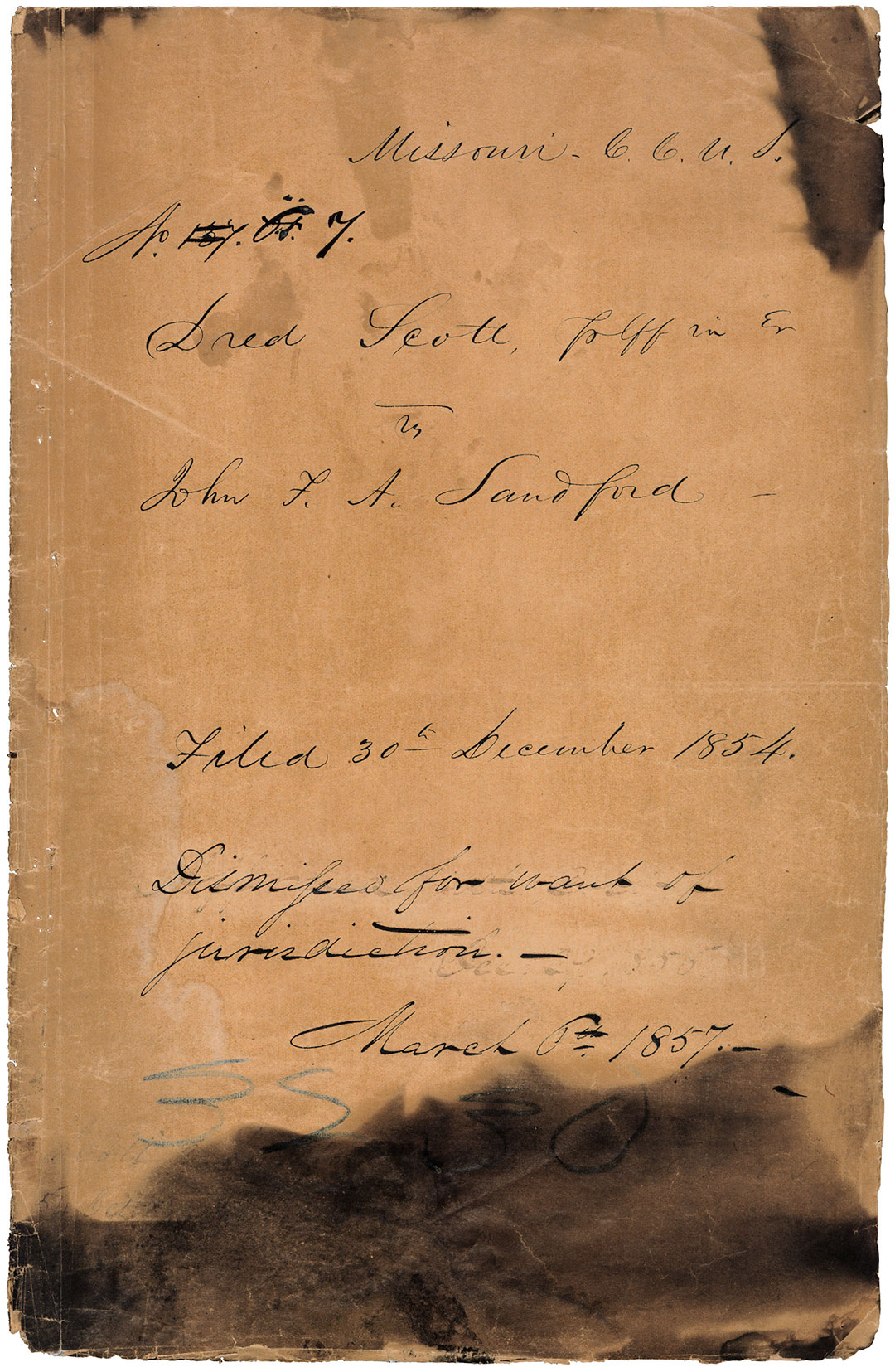
Dred Scott Case
Following the war, Congress passed the 13th Amendment ending slavery and passed the Civil Rights Act of 1866 to enforce voting rights for African American men. The bill read:
“Be it enacted . . . , That all persons born in the United States and not subject to any foreign power, excluding Indians not taxed, are hereby declared to be citizens of the United States; and such citizens, of every race and color, without regard to any previous condition of slavery or involuntary servitude, except as a punishment for crime whereof the party shall have been duly convicted, shall have the same right, in every State and Territory in the United States, to make and enforce contracts, to sue, be parties, and give evidence, to inherit, purchase, lease, sell, hold, and convey real and personal property, and to full and equal benefit of all laws and proceedings for the security of person and property, as is enjoyed by white citizens, and shall be subject to like punishment, pains, and penalties, and to none other, any law, statute, ordinance, regulation, or custom, to the contrary notwithstanding.”
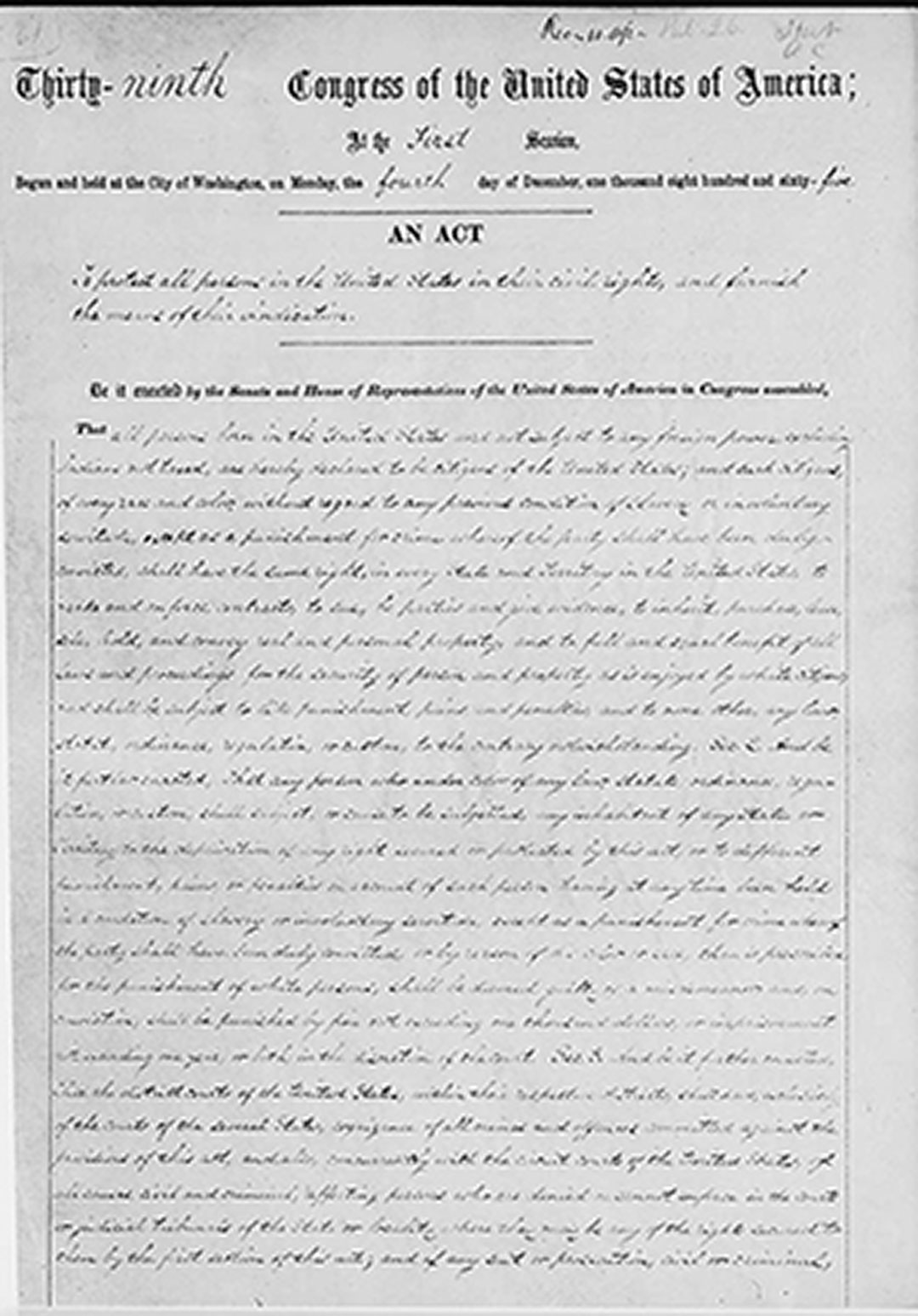
Civil Rights Acts of 1866
The failure to enforce this law and the Civil Rights Act of 1866 by President Andrew Johnson, several states, and the actions of radical groups like the Ku Klux Klan (KKK), led the Republican controlled congress to create a new amendment to the Constitution to ensure the rights of citizenship would be protected by the Federal government to all people born in the United States.
The 14th Amendment to the Constitution was ratified by the states in July 1868. Section 1 of the amendment declared that:
All persons born or naturalized in the United States, and subject to the jurisdiction thereof, are citizens of the United States and of the State wherein they reside. No State shall make or enforce any law which shall abridge the privileges or immunities of citizens of the United States; nor shall any State deprive any person of life, liberty, or property, without due process of law; nor deny to any person within its jurisdiction the equal protection of the laws.
This amendment officially rebuked the Dred Scott decision and ensured that any person born in the United States automatically became a citizen.
The following video features an excerpt from a Civil Discussion that we held in 2024. In it, Dr. Bruce Levine shares his thoughts of the amendment and its enduring meaning.
We hope you enjoy the video and please join, like, and subscribe to our YouTube channel for more engaging Civil War era content.
You can learn more about the 14th Amendment by clicking on the following links:
https://constitution.congress.gov/constitution/amendment-14/#amendment-14-section-1
https://www.archives.gov/milestone-documents/dred-scott-v-sandford